

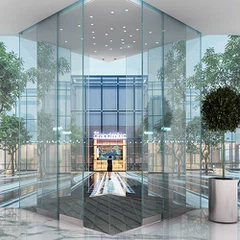

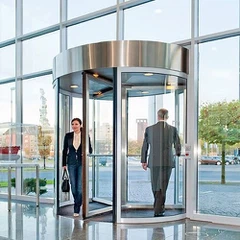

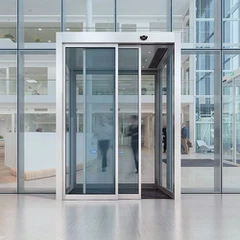



The following is a systematic analysis of the core advantages of electric-driven automatic doors, combined with mechatronics technology and engineering application scenarios:
I. Energy efficiency and economical operation advantages
1. Efficient energy conversion
Using permanent magnet synchronous motor (PMSM) or stepper motor, the power conversion efficiency can reach more than 92%, which is about 40% energy-saving compared with traditional hydraulic drive systems. Some high-end models are equipped with regenerative braking function, which converts kinetic energy into electrical energy and feeds it back to the power grid during the door deceleration stage.
2. Low maintenance cost
The power system does not require hydraulic oil replacement or pneumatic pipeline maintenance, and the annual maintenance cost is reduced by more than 60%. The modular design allows components such as motors and sensors to be replaced independently, reducing downtime.
---
II. Precision control and intelligent features
1. Dynamic motion control
- Achieve 0.1mm positioning accuracy through encoders, support variable speed start and stop (such as slow start and anti-pinch design of hospital ward doors)
- The programmable logic controller (PLC) presets more than 20 opening and closing modes to meet the needs of different scenarios (such as full-open mode during peak hours in shopping malls and half-open mode at night)
2. Intelligent IoT integration
Support Wi-Fi/Bluetooth remote control and link with the building management system (BMS). For example:
- Automatically adjust the operating frequency according to the flow of people data to reduce no-load energy consumption
- The fault self-diagnosis system uploads abnormal codes to the cloud in real time to achieve predictive maintenance
III. Environmental adaptation and reliability improvement
1. Wide temperature range operation capability
Using high temperature resistant motor windings (H-grade insulation) and low temperature grease, it can work stably in an environment of -30℃ to +60℃, which is 50% wider than the applicable temperature range of pneumatic systems.
2. Low noise and vibration control
The direct-drive motor structure eliminates gear transmission noise, and the operating sound pressure level is ≤45dB (A-weighted), which is suitable for sensitive places such as libraries and hospitals.
IV. Safety and compliance guarantee
1. Multiple protection mechanisms
- The current monitoring module prevents motor overload and automatically reverses when the torque exceeds 5N·m
- Redundant design: infrared light curtain + capacitive edge sensor double anti-pinch, in line with EN 16005 safety standards
2. Environmental compliance
No risk of hydraulic oil leakage, in line with the restrictions on hazardous substances in RoHS and REACH regulations.
V. Space and scene adaptability
1. Compact structure design
The integration of the motor driver is improved, and the installation space is reduced by 70% compared with the traditional system, which is suitable for the narrow door lobby of the renovation project.
2. Multi-door compatibility
The same drive system can be adapted to more than 10 door types such as sliding doors (maximum load 800kg), curved doors, and revolving doors.
Summary
Electric-driven automatic doors are rapidly replacing traditional drive methods with advantages such as high energy efficiency, intelligent control, and low maintenance. In commercial buildings, medical facilities, transportation hubs and other scenarios, their comprehensive operating costs can be reduced by 35%-50%. With the application of new technologies such as silicon carbide (SiC) power devices, the energy efficiency ratio of electric drive systems in the future is expected to exceed 95%.


