







Sliding Door Operator
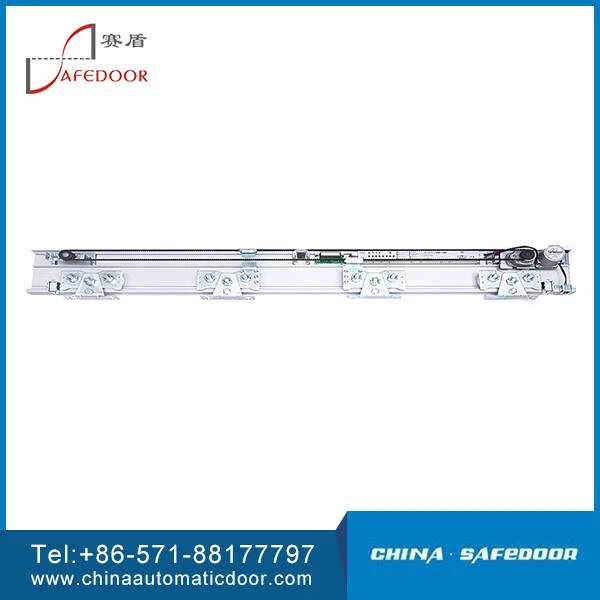
The Sliding Door Operator is a powerful device in the automatic door industry. The Art.1071.108 model is a model in the series designed specifically for heavy doors. The original intention of this operator is to deal with heavy and large doors to ensure that they can open and close automatically smoothly and safely.
Whether it is its strong load-bearing capacity for heavy doors or its anti-drop slide and sound-absorbing guide rail design, it reflects its leading position in the automatic door industry. Its existence not only provides convenient and safe automatic door solutions for various places, but also improves the environmental quality of the entire building and the user experience.


Advantages of Sliding Door Operator
1. Space saving: Sliding door operators allow the door to slide along the wall, without requiring additional space to open, making them ideal for environments with limited space.
2. Smooth operation: High-quality sliding door operators ensure that the door opens and closes very smoothly, reducing noise and vibration.
3. Easy automation: Sliding door operators can be easily integrated with various access control systems, such as sensors, remote controls, card readers, etc., to achieve automatic opening and closing of the door.
4. Safety: Many sliding door operators are equipped with safety sensors that can automatically stop and retreat when encountering obstacles, thereby avoiding pinching people or damaging the door.
5. Durability: Sliding door operators are usually designed for high-frequency use, so they are very durable and can withstand a large number of openings and closings without failure.
6. Low maintenance cost: Due to their simple design, sliding door operators are generally low-maintenance and easy to clean and maintain.
7. Aesthetics: Sliding door operators can be matched with a variety of door designs, including all-glass doors, which provides architects and designers with greater design freedom.
8. Environmental adaptability: Sliding door operators are suitable for a variety of environments, both indoors and outdoors, and in a variety of climatic conditions.
9. Accessible design: Sliding door operators can help achieve barrier-free design and provide convenience for wheelchair users and people with limited mobility.
10. Energy efficiency: Sliding door operators help maintain a stable indoor temperature and reduce energy loss, thereby improving energy efficiency.

Types of Sliding Door Operator
1.Electro-mechanical: Electro-mechanical swing gate operators are the go-to choice when the door will be primarily automatic, providing a seamless and convenient access solution. These operators use an electric motor to drive the mechanical components, such as gears or belts, which in turn move the gate. They are known for their efficiency, quiet operation, and reliability, making them suitable for both residential and commercial settings. Electro-mechanical operators can be programmed to suit specific needs, such as opening and closing speeds, and can be equipped with various safety features like obstacle detection and manual release mechanisms.
2.Electro-hydraulic: Electro-hydraulic swing gate operators represent another type of automatic door operator, combining the precision of electronics with the power of hydraulics. These operators use an electric motor to pump hydraulic fluid, which in turn drives the cylinder that opens and closes the gate. They are particularly well-suited for heavy gates or high-frequency use, as they can handle the demands with ease. Electro-hydraulic operators are robust and durable, making them a reliable choice for applications where the gate is used frequently and needs to operate smoothly over an extended period.
3.Telescopic: Telescopic swing gate operators are designed for applications where space is at a premium or where a standard swing gate would not be suitable. These operators allow the gate to slide horizontally, typically along tracks, which means they require less space to open and close. This makes them ideal for situations where the gate needs to open onto a busy street or in a confined area. Telescopic operators are also suitable for emergency exits, as they can be designed to open quickly in case of an evacuation, ensuring a clear passage for people to exit safely.
4.Heavy-duty commercial: Heavy-duty commercial swing gate operators are engineered to handle the demands of industrial single and bi-parting doors. These operators are built with stronger components and higher torque motors to manage the larger and heavier gates often found in commercial and industrial settings. They are designed for continuous operation and can withstand the rigors of frequent use. Heavy-duty operators may also include additional safety features, such as emergency stop buttons and anti-crushing mechanisms, to protect both the users and the integrity of the gate.
5.Very heavy-duty industrial: Very heavy-duty industrial swing gate operators are engineered to meet the demanding requirements of industrial single and bi-parting doors, providing unparalleled strength and durability. These operators are capable of handling extremely large and heavy gates, such as those used in warehouses, manufacturing facilities, and large-scale commercial properties. They are built with the highest quality materials and components to ensure long-lasting performance even in the harshest environments. Very heavy-duty operators often come with advanced features like programmable logic controllers (PLCs) for custom operation and integrated safety systems to comply with the stringent requirements of industrial settings.
What materials are used to make Sliding Door Operator?
In the realm of residential architecture, the choice of materials plays a significant role in both functionality and aesthetic appeal. Wood and glass are the most commonly used materials, each offering unique characteristics that make them suitable for various applications within residential buildings. Wood, with its natural warmth and versatility, is often used for structural elements, doors, windows, and even decorative features. It provides a sense of homeliness and can be crafted into a variety of styles, from traditional to contemporary.
Glass, on the other hand, is valued for its transparency and ability to allow natural light to flood interior spaces. Large windows and glass doors can create a seamless transition between the indoors and the outdoor environment, blurring the boundaries and expanding the perceived space. Glass is also a popular choice for balustrades, partitions, and feature walls, adding a modern and sleek touch to the interior design.

Application of Sliding Door Operator
- High traffic areas
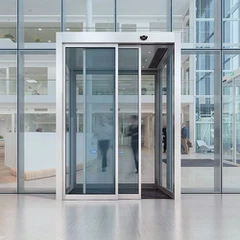
Automatic sliding doors are a practical solution for high traffic areas where there is a continuous flow of people entering and exiting a building. These doors are designed to handle two-way traffic flow, making them ideal for locations such as retail stores, airport entrances, and healthcare corridors. The smooth and efficient operation of these doors ensures that there is minimal disruption to the flow of traffic, allowing for a seamless experience for users. Additionally, the automatic operation of these doors reduces the need for physical contact, which is particularly beneficial in environments where hygiene is a concern.
- Directional traffic
In situations where the direction of traffic flow needs to be controlled, sliding doors can be configured to have one door for entry and another for exit. This feature is often used in retail stores, where one door is designated for customers entering the store and another for those exiting. It also finds application in healthcare facilities, where separate doors are used for incoming and outgoing visitors, patients, and staff. This helps to maintain a hygienic environment and prevents congestion at the entrance and exit points.
- Large retail businesses
Sliding door operators are commonly used on the outside doors of large retail stores, where there is a significant volume of foot traffic. These operators provide a modern and professional entrance, contributing to the overall aesthetic of the store. They also help to maintain a clean and tidy appearance by reducing the accumulation of dirt and debris. Additionally, the automatic operation of these doors can help to reduce the energy consumption of the store by ensuring that the doors are always open when needed, and closed when not in use.
- Elevators
Sliding door operators are also used in elevators to open and close the doors. This feature ensures a smooth and quiet operation of the elevator doors, providing a comfortable experience for users. The automatic operation of these doors also enhances safety, as they can be equipped with sensors to detect obstructions and prevent the doors from closing on people or objects. This helps to prevent accidents and ensures the safe and efficient operation of the elevator.
Components of Sliding Door Operator
- Brakes
- Couplings / Lovejoys.
- Encoders / Rev Counters.
- Grommets.
- Harnesses.
- Header Endcaps.
- Miscellaneous.
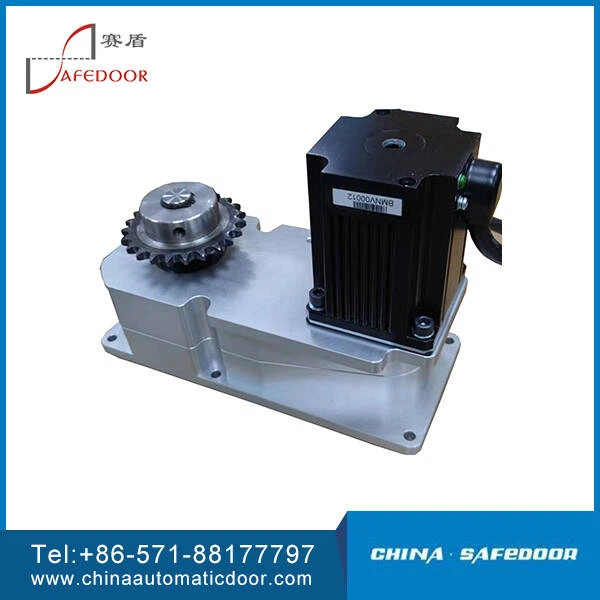
- Motor / Gearboxes.

How to maintain Sliding Door Operator?
Here are some tips for maintaining a sliding door operator:
Clean the track
Regularly clean and wipe the track to prevent sticking. You can also try to avoid rubbing your shoes on the track when crossing it.
01
Lubricate the tracks and rollers
Sliding doors roll on tracks, which can become dirty and rusty, causing problems. Lubricating the tracks and rollers can help, especially if you use the door frequently.
02
Adjust the rollers
Sliding doors have adjustable rollers on each side that help them slide on the tracks. You can usually find adjustment screws for the rollers hidden behind plastic plugs.
03
Clean the glass
Regularly cleaning the glass can help prevent debris from building up in the frame and tracks. You can use window cleaner and newspaper to remove dust, grime, and sticky fingerprints.
04
Check the sensors
If your sliding door doesn't close all the way, the sensors might be blocked. Make sure the power is off and then clean the sensors on the door panel.
05
Our factory


FAQS
Q: How do sliding doors operate?
Q: What are the parts of an automatic sliding door?
Automatic Sliding Door Sensors.
Automatic Door Anti-Risers.
Automatic Door Ball Catch Hardware.
Automatic Door Belt.
Automatic Door Belt Brackets.
Automatic Door Bottom Guides.
Automatic Door Bottom Track.
Automatic Door Breakout Switches.
Q: What is the name of the sensor on the automatic door?
Motion detectors are the most commonly installed type of automatic door sensor. As the name suggests, they detect movement in the vicinity of the doors.
Q: Which sensor is used for automatic door control?
Q: What are the requirements for an automatic door sensor?
Q: Do door sensors work without wifi?
Q: How much does it cost to replace a door sensor?
Q: How do you know if a sensor is bad?
Q: What makes door sensors go off?
SAFEDOOR: Professional sliding door operator manufacturers and suppliers in China for more than 15 years. If you're going to buy or wholesale bulk high quality sliding door operator made in China, welcome to contact our factory for more details.