




Automatic barriers are highly useful tools that are widely used to control the entry and exit of vehicles in various places, including parking lots, airports, industrial sites, and residential areas. They are popular because of their versatility, speed, reliability, and ease of use. Here we discuss different types of automatic barriers and their applications.
1. Boom barriers: These are the most commonly used automatic barriers that feature a horizontal boom bar that blocks or allows vehicular access. The boom barriers can be manufactured in different lengths and materials, such as aluminum, steel, and fiberglass. They are suitable for securing parking lots, toll booths, and entry/exit areas of public and private premises.
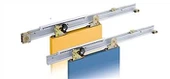
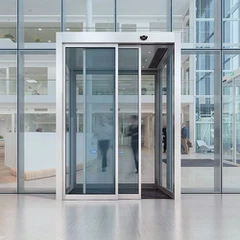
2. Sliding barriers: Sliding automatic barriers slide horizontally across the entrance or exit points. They are ideal for installations where there is limited space or where a vertical boom is inconvenient to use. Sliding barriers are also popular in areas with high traffic, where they can swiftly clear the way for vehicles to pass.
3. Swing barriers: Swing automatic barriers, also known as swing gates, are hinged at one end and can pivot 90 degrees or more to allow or block vehicular access. They are often used in larger openings where a sliding barrier would be impractical. Swing barriers are ideal for controlling entry/exit in industrial areas, warehouses, and high-security locations.
4. Folding barriers: Folding barriers are designed to provide robust protection and complete closure for a wide range of opening widths. They are perfect for securing car parks, warehouses, factories, and other large areas where safety and access control are paramount. Folding barriers are built using steel or aluminum materials and come in different heights and widths.
5. Underground barriers: Underground automatic barriers are hidden from view and are completely concealed within the pavement. They are ideal for preserving the aesthetics of an entrance or exit area while providing an effective barrier measure. Underground barriers are also popular in areas where there are height restrictions or where space is limited.
In conclusion, automatic barriers are a reliable and effective means of controlling access to a facility. Whether installed for security, traffic management, or aesthetic purposes, they offer a range of options with various features and functions to suit any application. By selecting the right type, users can reap the benefits of higher safety, convenience, and ease of use for their facility.