





Security Revolving Door Guide
There are many factors to consider when specifying a security turnstile, one of which is that the door may not require access control at all times.
Being able to switch between fully automatic and access-controlled entrances is not only possible, but also one of the best solutions for buildings such as hotels, financial or pharmaceutical buildings.
Reduce the risks involved in data and product theft and improve employee safety. Often with a two-factor or multi-factor identification process installed, the access control system may require a card or token and a piece of information, such as a password.
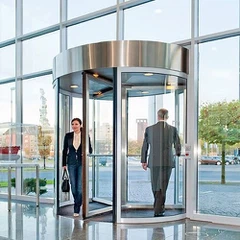
Revolving doors are probably the most used type of entry system for major offices in metropolitan areas. By their very nature, they provide the best way to control the internal environment with an "always on, always off" system and only let air in/out on each rotation.
Security turnstiles come in a variety of diameters, heights, and finishes, but they also have various security levels associated with them. Many security companies often refer to the 4Ds of security: blocking, detection, delay, and defense, which can be defined as follows:
Deterrence - prevent criminal activity on your building
Detect - detect any security breaches on your building
Delay – the process of slowing down an invasion or attack on a building
Defense - If the 3 above fail, respond to the attacker's actions